
Searching the Georgetown Court Docket
First, sort the Georgetown matter into the right lane: Superior, Juvenile, Probate, Magistrate, or traffic. The Georgia E-Access directory sends Quitman Superior Court searches to PeachCourt. That provider needs an account. It searches by exact case number or by party name. Georgetown traffic citations run through a different county-linked vendor. Probate or Magistrate files may take a phone call to the shared office. There is no Georgetown-only portal, so an empty city search proves nothing. Use the court that absorbed the transferred municipal jurisdiction, or the county-wide filing.
- Read the citation or filing to identify the court class.
- For Superior Court, follow E-Access to PeachCourt and sign in.
- For traffic, use EZCourtPay with the required date of birth and an identifier.
- Call the shared Probate/Magistrate office for its records.
- Confirm settings and copies with the custodian.
Georgetown and Quitman Became One
Voters approved consolidation in November 2006, and the merger took effect in spring 2007, which is why the government goes by Georgetown-Quitman County. Georgetown stayed the county seat. Its courts, though, are county-wide now. The consolidation charter keeps Superior, Juvenile, Probate, and Magistrate Courts running and abolishes the Municipal Court of the City of Georgetown, moving its jurisdiction and pending cases into Probate or Magistrate Court.
Local rule: Georgetown is the place label, but a Quitman County court office is the record custodian.
Georgetown Municipal Court Basics
No standalone municipal court exists in Georgetown today. The charter pushed its old workload to Probate or Magistrate Court. So a search for a city ordinance matter, a warrant proceeding, or a traffic case belongs at the shared office. Skip any invented city clerk or municipal portal. The official Probate/Magistrate page lists Judge L. Matthew Self, Chief Clerk Julia Floyd, P.O. Box 7, and 229-334-2224. Probate covers traffic, estates, guardianships, licenses, and vital records. Magistrate handles warrants, civil cases up to $15,000, dispossessory actions, garnishments, and returned checks.
Georgetown Unified-Place Court Context
The official 2020 Census incorporated-place table puts 2,235 people in the Georgetown-Quitman County unified government. That figure describes the place, not court filings or docket volume, and no Georgetown-only municipal caseload exists now that the court is gone. View the official Census table.
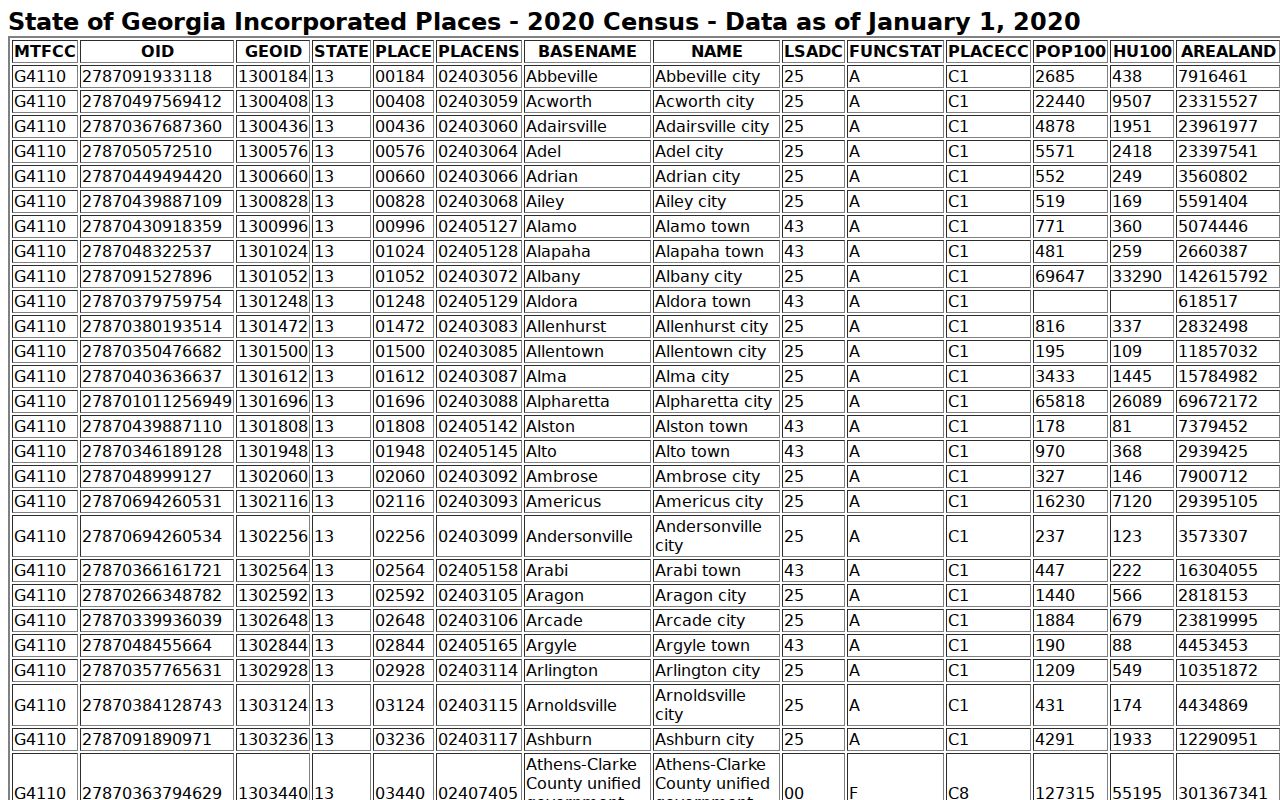
The image supports the population vintage, but it cannot estimate case volume.
Court Dates and Settings in Georgetown
No separate municipal calendar exists for Georgetown. Superior settings can surface on the Pataula Circuit calendar, a month view shared by seven counties, so verify that an event belongs to Quitman. Confirm Probate, Magistrate, and traffic dates with their office.
| Date | The scheduled day, subject to reset or order. |
|---|---|
| Time | The listed call time, which may cover several cases. |
| Courtroom | The room or location, if published. |
| Judge | The assigned or setting judge. |
| Setting Type | Arraignment, hearing, trial, or other event. |
Georgetown Has Two Court Addresses
Two addresses serve Georgetown courts. The unified-government office sits at 25 Old School Road, while the Superior Court records counter is at 111 Main Street, Suite 2. The clerk directory lists P.O. Box 307 and telephone 229-334-2578. Hours run 8:00 to noon and 1:00 to 5:00 on weekdays.
Probate/Magistrate Office
P.O. Box 7
Georgetown, GA 39854
229-334-2224
Call before you go, since older descriptions cannot certify today's entrance, parking, security, or accessibility route.
Traffic Tickets in Georgetown
Traffic falls to Probate Court here. The county link opens EZCourtPay. Its form demands a valid date of birth plus either a citation number or a last name. No city selector appears because the route is county specific already. Remember, the portal is a search and payment gateway, not a full docket viewer. Georgia Courts warns that citations can take 7 to 21 business days to show up. Call 229-334-2224 about a missing citation, an urgent date, or a mandatory appearance. Paying generally accepts the penalty and a guilty plea. Contesting usually means appearing unless the court says otherwise. See Quitman traffic tickets for the county route.
Georgetown’s 1939 Court Landmark
The current courthouse gives Georgetown a court setting with real history. County accounts say the wooden courthouse burned in 1920. Court functions then moved to a warehouse. The present brick building opened in 1939 with federal relief support. The National Register notes Stripped Classical and Colonial Revival features, PWA construction, courtroom transoms, original finishes, and nine steps up to the courtroom. Read the National Park Service record. That architectural account is no substitute for a current accessibility review. So call about accommodations, entry, and security.
Where Georgetown Cases Go
Traffic and the former municipal jurisdiction flow through Probate or Magistrate, and Magistrate also covers warrants and smaller civil matters. Superior Court takes felonies, broad civil disputes, divorce, and domestic relations. Juvenile cases sit in Juvenile Court under stricter access limits.
Docket flow: Former Georgetown Municipal Court › Quitman Probate or Magistrate Court › Superior Court of the Pataula Judicial Circuit
This flow shows jurisdiction only, not that every case visits each court. The Quitman County court docket maps the full court picture.
Georgetown Superior Docket Access
For Georgetown cases filed in Superior Court, E-Access points to PeachCourt. Georgia also marks Quitman Superior as mandatory for Peach Court e-filing. Neither fact makes the public docket open without an account. Once signed in, pick the county and court. Then search by exact case number or party name. Quitman's number format is not published. So a missing case deserves a call to the Superior Clerk: ask whether the file is paper, restricted, sealed, outside vendor coverage, or sitting in another court. Check any name match against the case number, caption, and dated entries.
Georgetown Docket Search Fallbacks
When online access fails, switch channels rather than giving up. Call the Superior Clerk for Superior records. For traffic, estates, smaller civil matters, and transferred municipal work, call Probate/Magistrate, and give the court class, approximate year, an identifier, names only as needed, and the exact document sought.
- Ask whether the file is paper, scanned, restricted, or held elsewhere.
- Request current copy and certification fees.
- Confirm accepted mail or counter methods.
- Record the search date and office contacted.
- Verify whether a hearing is in person, video, or hybrid.
The clerk posts no local record-request form or Superior certified-copy price sheet. Follow the clerk's current instructions.
Georgetown Court Record Access Rules
Most Georgetown court records are open to the public. Georgia treats judicial records differently from executive-agency records, though, so route each request through the court custodian and follow that court's own procedure. Juvenile files, adoptions, sealed matters, and protected information may be withheld.
Key Rules:
Georgia court-record guidance explains the judicial-record distinction.
O.C.G.A. § 15-6-60.1 places original Superior records with the clerk.
Uniform Superior Court Rule 21 addresses access, sealing, and identifiers.
Georgetown Docket Data Limits
Georgia's court dashboards report self-reported case counts, not individual records. A dashboard cannot prove a Georgetown case exists. It cannot hand you a hearing date or settle a disposition. Census population is no substitute for a municipal caseload either. Georgetown is both a town and part of the consolidated government's name. That invites exactly this confusion. County court figures and a place's population measure different things. For the real task, use the clerk, PeachCourt, EZCourtPay, or the circuit calendar. And remember: absence from a dashboard or portal is not proof that no case exists.
Georgetown Docket Documents and Copies
A docket entry can name a filed paper without showing its image. PeachCourt sometimes provides documents through an account, though availability varies. Sealed records, adoption material, and unexecuted proposed orders stay excluded. A vendor's charges are not the clerk's price for a plain or certified copy. Only a certified copy carries the authentication of the court custodian. For a Georgetown Superior case, give the clerk the exact number. Also give the filing year and the document title or entry date. Ask whether the record is electronic or paper. Ask what the current copy and certification charges are, and which delivery and payment methods are accepted. The clerk publishes no local Superior certified-copy fee sheet or general record-request form. So ask directly. Send Probate, Magistrate, and traffic requests to the shared office rather than assuming the Superior Clerk holds them. Older Georgetown references span the courthouse fire, temporary court quarters, and the later courthouse. That history does not prove any record was lost. It does make a narrow date range and the correct court class useful when staff check the older indexes.
Georgetown Settings Can Change
A Georgetown setting on paper is never final. A continuance can move it. A judge can correct the calendar. An emergency order can suspend deadlines or shut offices down. The Pataula Circuit’s January 2025 winter order did just that, closing Superior, Magistrate, Probate, and Juvenile Courts in Quitman and the other circuit counties for part of January 21 through January 22, with reopening set for January 23. Georgia Courts also lists a Pataula Hurricane Helene order from September 2024. When disruption seems possible, check the official emergency-order page. Then call the court named on the filing or citation. Ask for the current date, time, location, setting type, and whether attendance is in person, video, or hybrid. A saved calendar or payment screen should never outweigh the court’s current instruction. For video observation, the circuit asks the public to contact a judge’s office at least 24 hours ahead. That policy covers watching a hearing, and it does not create a city streaming calendar.
Confirming a Georgetown Docket Match
Before treating a name result as the right Georgetown case, check the case number, court, caption, filing year, and dated entries. Save your search date, and ask the custodian about any conflict between a portal, a calendar, and a clerk response. The originating court's current record controls.